For years, smart glasses were dismissed as a novelty—tech toys for early adopters who wanted to capture POV videos or look like they walked off a sci-fi set. But as we move deeper into 2026, the narrative has shifted. The "cool factor" is being replaced by something far more profound: utility.
Two devices illustrate this shift particularly well:
-
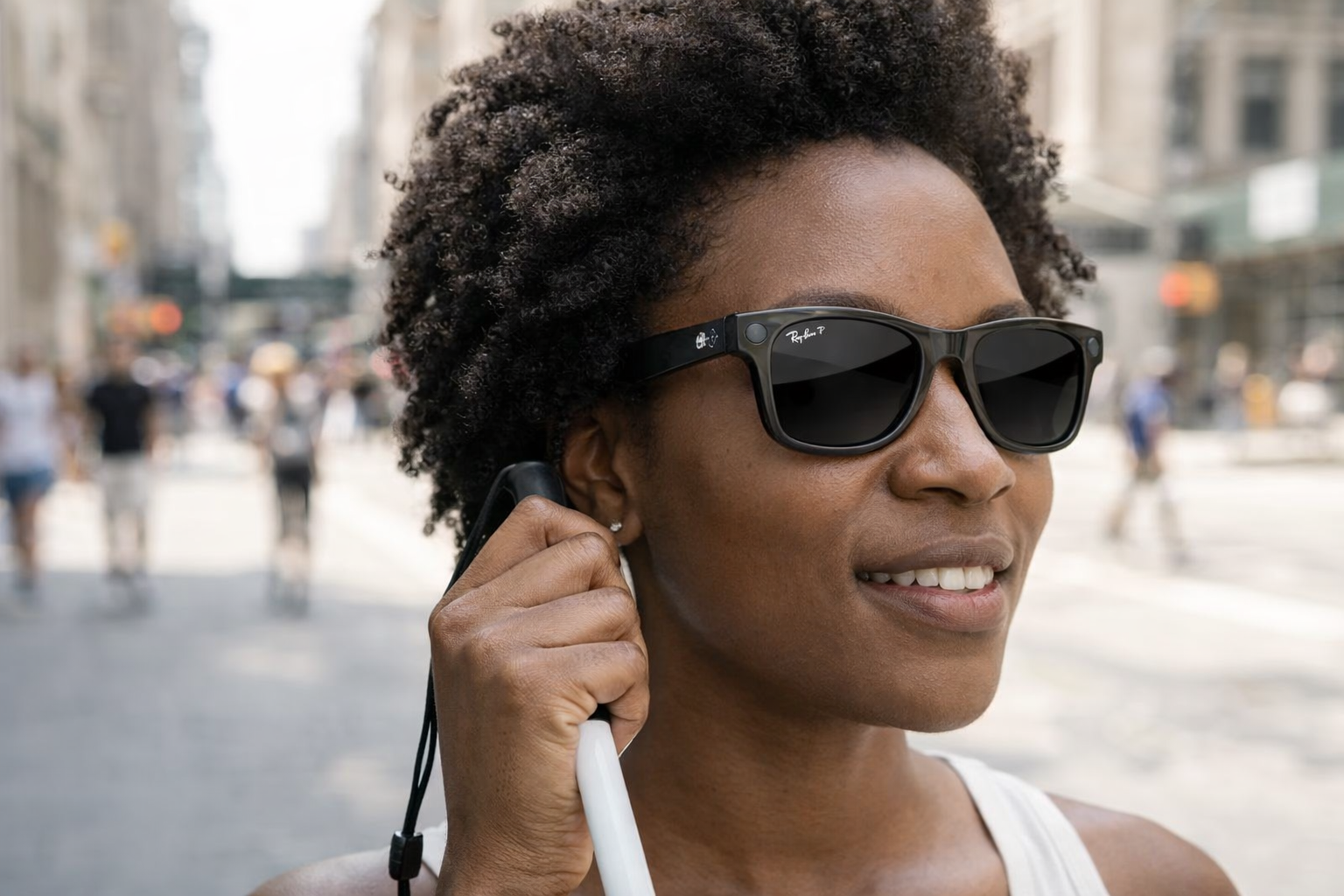
Meta smart glasses, which are especially useful for people with visual impairments
-
Even Realities smart glasses, which are uniquely suited to people with hearing impairments
These devices were not originally marketed as accessibility tools. Yet in practice, they represent one of the most meaningful accessibility upgrades in years.

Accessibility Is About Independence, Not Replacement
Accessibility technology does not “fix” disability. Its real value lies in reducing friction:
-
friction in understanding environments
-
friction in communication
-
friction in everyday decision‑making
The most effective accessibility tools don’t replace human support — they increase autonomy between moments where support is needed.
Meta Smart Glasses: Supporting Users With Visual Impairments

Meta Smart glasses combine a forward‑facing camera, open‑ear speakers, and conversational AI to act as a real‑time environmental interpreter for users with low vision or partial sight. Basically, their design enables them to act as a second set of eyes
Key Accessibility Features:
- "Be My Eyes" Integration: This is the killer app for accessibility. With a simple voice command, a user can initiate a video call to a sighted volunteer. The volunteer sees exactly what the user is looking at through the glasses' 12MP camera. Whether it’s checking the expiry date on a carton of milk at Checkers or navigating a busy intersection in Johannesburg, the volunteer can provide real-time, hands-free verbal guidance.
- Meta AI Description: For moments when human interaction isn't necessary, the on-board Meta AI can describe surroundings. A user can say, "Hey Meta, look and tell me what I’m holding," and the AI will identify currency, read a menu, or describe a street sign.
This enables everyday tasks such as identifying products, reading signs, navigating unfamiliar spaces, and confirming visual details — all hands‑free.
For many users, this reduces reliance on others for small but frequent decisions, which has an outsized impact on independence and confidence.
Even Smart Glasses: Accessibility for Hearing Impairments

Even smart glasses take a fundamentally different approach — one designed for people who are deaf or hard of hearing.
The Even G2, their latest release:
-
has no speakers
-
provides no audio output
-
uses a a high-fidelity Heads-Up Display (HUD) as it's primary interface and advanced microphones for capturing speech.
It does not try to "fix" hearing; it visualizes it.
Key Accessibility Features:
-
Conversate (Live Transcription): The G2’s standout feature is "Conversate." It uses the built-in microphones to capture speech and projects it as text onto the lenses in real-time. For a deaf user, this is akin to having subtitles for the real world. It allows for fluid conversation in noisy environments—like a bustling coffee shop—where hearing aids often struggle to isolate voices.
- The "Spatial" Display: The G2 utilizes a "floating spatial display," meaning the text appears to float at a comfortable distance in front of the user, rather than obstructing their view. This allows users to maintain eye contact during conversation rather than looking down at a phone for transcription apps.

Different Disabilities, Different Strengths
These glasses are not competitors — they address different needs.
|
Use Case |
Meta AI Glasses |
Even Glasses |
|
Visual impairment support |
Strong |
Limited |
|
Hearing impairment support |
Strong courtesy of features like "Conversation focus" and "translate" |
Strong - translation supports more languages and glasses are more focused on assisting conversation |
|
Audio feedback |
Yes |
No |
|
Visual display |
Minimal (except Meta Ray‑Ban Display) |
Primary |
|
Real‑time transcription |
Yes |
Core feature |
Choosing the right device depends on the user’s specific accessibility requirements.

Why This Matters
Accessibility technology often arrives late or at a premium. Smart glasses matter because they:
-
require no specialised infrastructure
-
integrate into everyday work and social environments
-
reduce stigma by resembling normal eyewear
They can be used at work, in education, on public transport, and during daily errands — expanding accessibility beyond controlled environments.
Accessibility Is Becoming Mainstream — Quietly

Smart glasses are increasingly adopted by creators, professionals, and early adopters. This mainstream uptake drives:
-
faster software improvement
-
better hardware reliability
-
broader language and use‑case support
For users with disabilities, this means better tools without needing niche or segregated products.

Final Thoughts
Smart glasses do not replace community support, interpreters, or mobility aids. What they do offer is something equally important: greater independence between moments of assistance.
-
Meta AI glasses help users understand what they cannot see
-
Even G2 glasses help users read what they cannot hear
Together, they signal a future where accessibility is embedded into everyday technology — not bolted on as an afterthought.
Notes
-
Be My Eyes availability varies by region and firmware.
-
Meta AI availability varies by region and firmware
-
Even G2 transcription accuracy depends on language, accent, and environment; performance in multilingual South African contexts may vary.
-
Both glasses work with an app on a compatible smartphone with a strong internet connection. Both glasses are Android and iOS compatible.
1 comment
Jacob Kruger
Nice to ‘see’ that some people here in South Africa are aware of some of the modern advances in assisstive technology, or how some mainstream products can be adapted to become assisstive as such, on a sort of plug-and-play basis – there are however also a lot of other alternatives that might suit local budgets a bit better 😉