
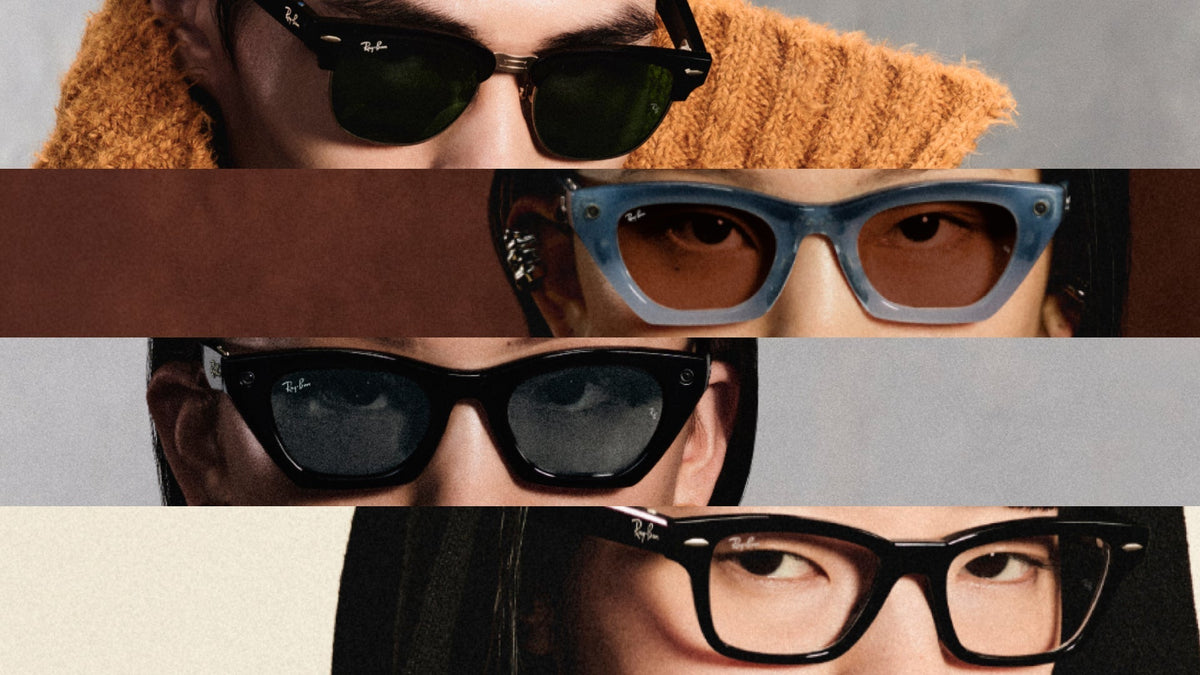
Meta Connect 2026 felt less like a product launch and more like Meta laying its cards on the table. The company still sells VR headsets, of course, but the centre of gravity has shifted. Meta wants computers to sit on your face, speak into your ears and see enough of the world to be useful.
That sounds slightly dystopian when you put it that way. It is also, annoyingly, quite compelling.
The new lineup includes Ray-Ban Meta Gen 3, camera-free Ray-Ban Meta Audio, new Meta-branded frames, an ambitious pair of VR Glasses, fresh Display features and a pocket-sized home for Muse. Some of these products are available to order now. Others are promises for 2027. This is the whole picture, including what South African buyers can actually do with it.
The short version
- Ray-Ban Meta Gen 3 is the sensible upgrade: better fit, longer battery life and three frame shapes.
- Ray-Ban Meta Audio keeps the speakers and AI, then removes the camera. For many people, that is the entire selling point.
- Meta VR Glasses are the big swing: a 100 g spatial-computing headset with a separate puck and a 2027 launch window.
- Meta Ray-Ban Display gets better navigation and Hologram calls, but the new features are not confirmed for South Africa.
- Muse is coming to glasses, although South African access remains unclear.
Image: Meta
The real announcement is the range itself
There is no single star product at Connect 2026, at least not in the usual sense. There is a ladder. Audio glasses sit at one end, camera-equipped glasses occupy the middle, Display adds a visual layer, and VR Glasses take over your field of view entirely. Each step asks you to let the computer a little further in.
This is useful because people do not all want the same thing from smart glasses. Some want a camera. Some very specifically do not. Some want a screen; others want nothing between their eyes and the world. Meta has finally stopped pretending that one Wayfarer can answer every version of that question.
If you are trying to choose between the full range rather than catch up on the announcements, our Meta AI Glasses 2026 buyer's guide compares the current generations, frame families and prices in one place.
Ray-Ban Meta Gen 3 is the grown-up version
Ray-Ban Meta Gen 3 is not a dramatic reinvention. It is what happens when a strange new product survives long enough to become a normal one. The frames are slimmer, the fit is more adjustable and the battery now lasts up to nine hours, one hour longer than Gen 2.
You also get a customisable action button, a six-microphone array that cuts more than 90% of background noise, a 12 MP camera and 3K Ultra HD video. None of that changes what the glasses fundamentally are. It simply removes more of the little irritations that make wearable technology feel like technology.
The frame choice has widened too:
- Wayfarer Gen 3: the familiar square frame, available in Standard and Large.
- Aviator Gen 3: the classic pilot shape, now carrying a camera and open-ear audio.
- Zena Gen 3: a bolder cat-eye shape for anyone bored of Wayfarers.
Clear lenses start at R14,999, polarised models at R15,999 and Transitions models at R16,999. The 90th Anniversary Aviator, finished in Milky Beige with brown Transitions lenses, is listed at R18,999.
Gen 3 is the easiest recommendation from the event. Not the most exciting. Just the easiest. It is the pair most likely to disappear into your day and, for a wearable, disappearance is a kind of success.
Ray-Ban Meta Audio makes a surprisingly strong argument
Not everyone wants a camera on their face. This is obvious, but the smart-glasses industry has spent years treating it like a minor objection. Ray-Ban Meta Audio takes that objection seriously.
The Burbank and Clubmaster frames keep open-ear speakers, microphones, calls and voice-based AI. They remove the camera, weigh 43 g and run for up to 12 hours. The charging case adds up to 48 more. In practical terms, they sit somewhere between glasses, earbuds and a voice assistant, which is not a glamorous description but may be exactly why they work.
- Burbank: a rectangular frame in Standard and Large.
- Clubmaster: the familiar browline shape in Standard.
Prices run from R11,499 to R13,999. Shipping is expected between 27 October and 3 November 2026.
Audio will look like the lesser product if you compare specification sheets. It may be the more honest product if all you want is music, calls and AI without the social friction of a camera.

Meta Glasses are becoming their own fashion line
The Ray-Ban partnership gave Meta credibility. Its own frames give it freedom. Nova, Capri and the new editions are less constrained by what people expect a Ray-Ban to look like, so the range can be cheaper, stranger and more playful.
Meta Nova is listed at R12,499 in Honey Tortoise with Transitions Graphite Green lenses. Meta Capri is the cat-eye option at R10,999. Neither frame is radical, but both widen the category beyond the square black glasses that have come to represent wearable AI.
The LISA collaboration pushes harder into collectable fashion:
- Meta Capri LISA Edition: Eclipse finish, grey lenses and custom star details, listed at R12,999.
- Meta Adventurer LISA Edition: Moonlit Sky frame, Blush lenses and the same LISA extras, also R12,999.
There is also an Ivory-and-Black Meta Starfire Kylie Edition at R12,999 and a new Adventurer with a Plug-In Case at R10,999. The latter is expected to ship between 6 and 13 November 2026.
The clear Meta Fury with mirrored lenses is more elusive. It is limited to Connect and Meta Lab stores at launch and is not listed at 180by2. Regular Meta Fury styles remain available separately.
Meta Ray-Ban Display is expanding, just not to South Africa
Display sits in an awkward but interesting middle. It looks like a pair of glasses, but puts information directly in the lens: directions, messages, captions and now a photorealistic stand-in for your face during calls.
Cycling and public-transport directions are rolling out in the US and Canada. Hologram Early Access is coming to WhatsApp in the US. The hardware is also expanding to the UK, Canada, France, Italy and Germany.
South Africa is absent from that list.
This does not make the glasses useless here, but it changes the buying calculation. 180by2 lists existing Meta Ray-Ban Display variants at R27,499, down from R32,499. You should buy them for what works in your region now, not for a feature shown on a US stage.
Meta VR Glasses are the mad bit, in a good way
I have a soft spot for devices that are slightly unreasonable. Meta VR Glasses fit the description.
They weigh about 100 g, use a 5K Infinite Display built on micro-OLED panels and move the battery and processor into a puck that clips to your belt, pocket or bag. That puck is a compromise, obviously. It is also the reason the headset can get close to the weight of heavy sunglasses while doing something much closer to a Quest.
The promise is bigger than portable VR. Meta is pitching a personal cinema, spatial workspace and gaming console, navigated through your eyes and hands. It is the first IMAX Enhanced-certified VR device, with Dolby Vision, Dolby Atmos and access to select films in IMAX's expanded aspect ratio. Those are very grand claims for something that still hangs a computer from your pocket, but that tension is what makes the product interesting. The future rarely arrives looking completely dignified.

Image: Meta
Launch is planned for the northern-hemisphere spring of 2027. The 180by2 Meta VR Glasses page lists the expected South African price at R44,999 including VAT, with local fulfilment expected after launch stock becomes available. Our Meta VR Glasses deep dive covers the display, puck and entertainment pitch in more detail.
This is not the safe preorder. It is for the person who sees a cinema strapped to their head and thinks: finally.
Muse wants to follow you around
Muse is Meta's attempt to give personal AI continuity. Instead of speaking to a generic assistant that forgets you the moment the conversation ends, the pitch is an agent that knows your context, works across devices and can act on what your glasses see.
At Connect, Meta showed Muse moving onto AI glasses in the coming months. It also introduced Muse Charm, a pocket-sized device built around real-time voice. There is no price yet, and Muse is not currently available in South Africa.
This is the least tangible part of the event and possibly the most important. Hardware changes every few years. An assistant that follows you from phone to computer to glasses could change the relationship between all of them. Or it could become another thing asking for permission to read your life. Probably both.
Accessibility is where the glasses stop feeling frivolous
It is easy to discuss AI glasses as expensive toys for early adopters. That picture becomes incomplete once the camera starts reading text, identifying objects and describing parts of the world to someone who is blind or has low vision.
Our work with the South African National Council for the Blind has focused on camera-equipped Ray-Ban Meta and Oakley Meta glasses. Visual AI can support scene description and text recognition where those features are available. It can also be wrong. Medication labels, expiry dates and anything safety-critical should always be checked another way.
Ray-Ban Meta Audio approaches accessibility from the other side. It brings calls and media close to the ears while leaving them open to surrounding sound. It is not a hearing aid and does not amplify nearby speech, but it may suit some people with reduced hearing.
Display adds visual captions in supported markets. That can help someone who can read the in-lens display; it does nothing for someone who is blind. Different needs require different glasses. This sounds obvious too, yet it is worth saying because “accessibility” is not one feature or one type of person.
Meta Connect 2026 availability at a glance
| Product | What changed | South African position |
|---|---|---|
| Ray-Ban Meta Gen 3 | Longer battery, slimmer design, new controls, Aviator and Zena frames | Listed from R14,999 |
| Ray-Ban Meta Audio | Camera-free audio and AI glasses with up to 12 hours of battery life | R11,499 to R13,999; expected shipping 27 October to 3 November 2026 |
| Meta Nova | New Honey Tortoise frame with Transitions lenses | R12,499 preorder |
| Meta Capri | New cat-eye Meta frame | R10,999 preorder |
| LISA editions | Collectable Capri and Adventurer designs | R12,999 each |
| Meta Ray-Ban Display features | Cycling and transit directions, Hologram calls, more launch markets | Hardware listed from R27,499; new features not confirmed for South Africa |
| Meta VR Glasses | 100 g headset, 5K micro-OLED display, separate compute puck | Coming in 2027; expected price R44,999 |
| Muse Charm | Pocket device for real-time voice access to Muse | No local listing or price |
What Meta Connect 2026 means for South Africa
South African buyers are used to living slightly downstream from global technology launches. The device appears, the keynote ends, and then the practical questions begin: What works here? When will it ship? Who handles the warranty if something goes wrong?
The good news is that most of the new glasses are listed locally in rand, with local warranty and support. The less-good news is that software remains regional. Display features, Muse access and some AI functions can arrive later, or not at all. A local product page does not magically move South Africa onto a global rollout list.
Currently orderable glasses should ship within roughly two to three weeks, depending on supplier stock and import timing. Products awaiting launch enter that window only after launch stock becomes available. Prices and dates can move.
That caveat should not swallow the story, though. The story is that Meta now has a real glasses ecosystem. Camera or no camera. Audio or display. Everyday eyewear or almost-VR. Connect 2026 was the point where those experiments began to look like a range.
Frequently asked questions
What was the biggest Meta Connect 2026 announcement?
Meta VR Glasses were the most ambitious announcement, but Ray-Ban Meta Gen 3 and Meta Audio are the products most buyers can act on sooner.
Which new Meta glasses are best for most people?
Ray-Ban Meta Gen 3 is the best all-round choice if you want a camera. Ray-Ban Meta Audio is better if you mainly want music, calls and AI without wearing a camera.
Are the new Meta Connect features available in South Africa?
Not all of them. Product hardware is listed locally, but Display features, Muse and some AI functions remain limited to specific countries, languages and rollout schedules.
When will Meta VR Glasses launch?
Meta plans to launch VR Glasses in the northern-hemisphere spring of 2027. South African delivery will depend on launch stock, supplier allocation and import timing.
See the new Meta glasses
Compare the frames, lenses and current South African availability before choosing. The most advanced pair is not automatically the right one; the right pair is the one whose compromises you can live with.
Compare Meta glasses at 180by2